
For a better experience on Pelican Energy TCI Update Your Browser
Have you registered with the online portal? Register online now.

Fuel Prices and Your Energy Bill

Here’s What To Expect and How To Prepare
Price Rising

Your Energy
Questions
Answered

We’re committed to keeping you informed of fuel price changes so you can prepare and plan.

Frequently Asked Questions

Global fuel prices are significantly higher-than-usual, and we want to help you understand what this means for your electricity bill— especially as we approach the summer months. This page explains why electricity bills may increase, what you can expect in the coming months and what you can do to help reduce the impact.

Why Are Fuel Prices Rising?

Ongoing conflict and instability in parts of the Middle East continue to affect global fuel supply chains and international energy markets. These global events can increase the cost of fuel worldwide.

As an island energy system, the Turks and Caicos Islands rely on imported fuel to generate electricity. This means that changes in international fuel prices affect local electricity costs, even though these factors are outside the control of both the utility and customers.

 

How This Affects Your Bill

Fuel is a key part of how electricity is generated. When global fuel prices increase, this places upward pressure on the fuel factor rate—the part of your electricity bill that reflects the cost of fuel at the time it is purchased from our fuel supplier. When the fuel factor rate (charged per kilowatt-hour or kWh) increases, each unit of electricity becomes more costly.

Based on current projections from our fuel supplier:

  • Fuel costs are expected to rise in the coming months
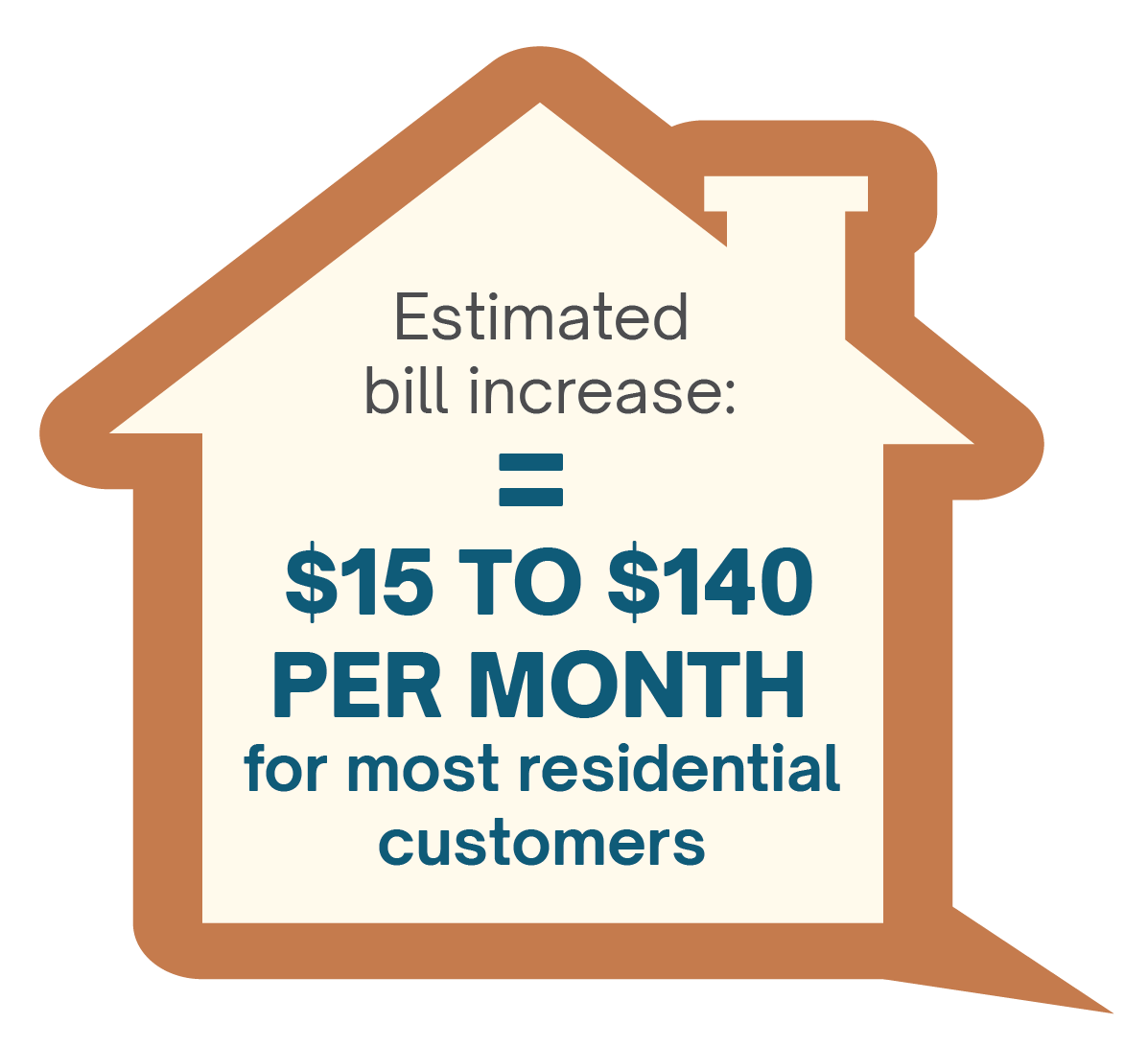
  • As a result, electricity bills will significantly increase as of June and July 2026.

These months also coincide with warmer weather, when energy usage is typically higher due to air conditioning and other factors.

What Are the Current Projections?

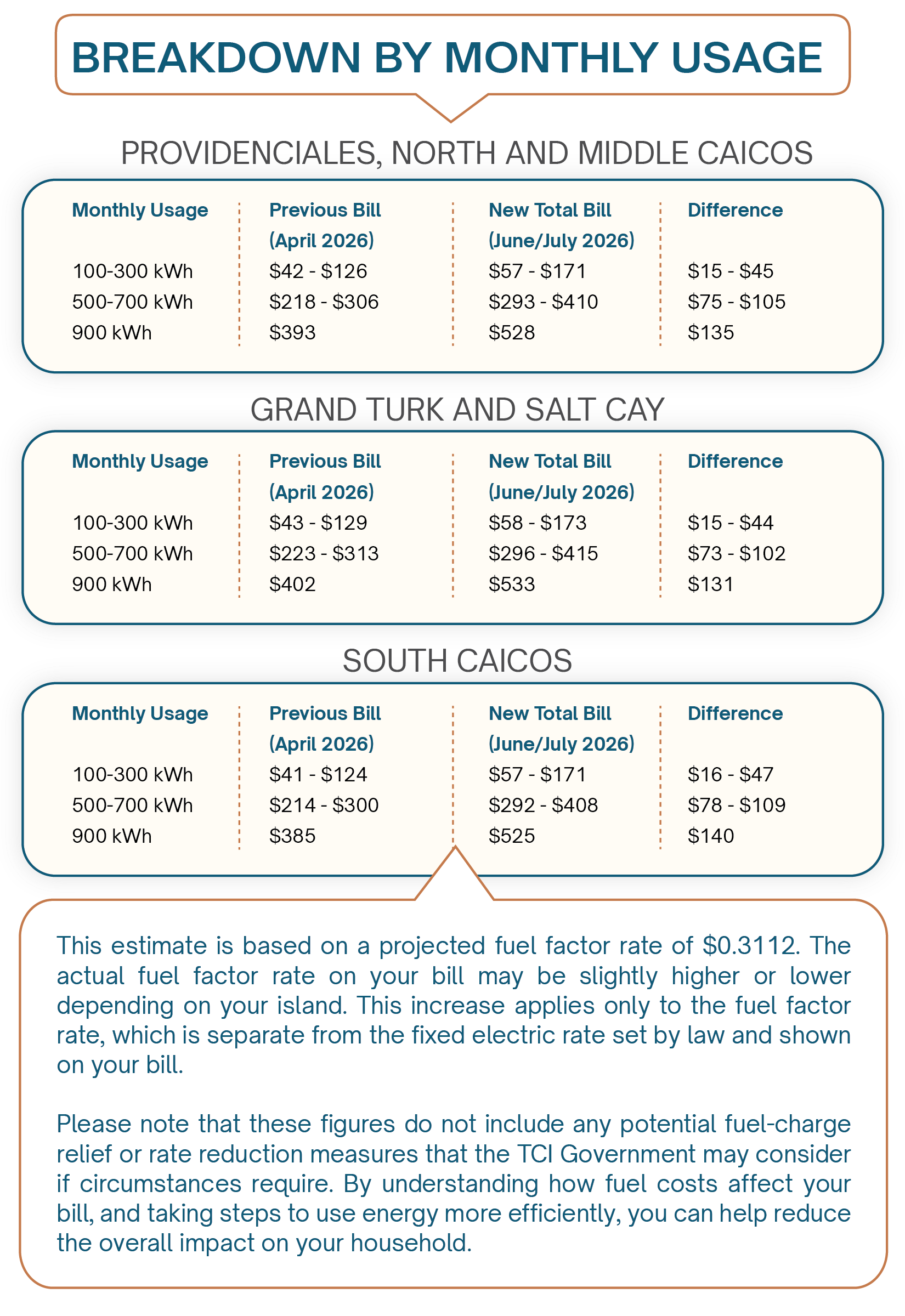
At this time, projections indicate that the fuel factor rate will increase significantly as of June and July 2026, rising from approximately $0.1751 to an estimated $0.3112 per kilowatt-hour (kWh). South Caicos customers will experience a higher fuel factor rate at the end of June; all other islands will see this rate increase on their bills at the end of July.

Fuel factor projections are based on the best available information. The actual rate may be higher or lower based on the service territory. As additional information becomes available, projections on the expected duration of the increased fuel factor rate will be provided.

A similar increase occurred during the last fuel spike in March 2022, at the start of the Russia-Ukraine conflict, when fuel prices peaked at $0.3048 with the lowest being $0.1962.

What this means for you:

  • If your energy usage stays the same or increases, your electricity bill is likely to be higher.
  • If you reduce your energy usage, you can help limit the impact on your bill.
Price Changes
Price Changes

What Are We Doing To Support Customers

We recognize that rising fuel prices can place added strain on customers, especially when combined with other cost‑of‑living pressures.

To support our customers, Pelican Energy TCI will offer special promotions with energy-efficient appliance giveaways and other products during the summer months. Programs, tips, and tools are also available to help customers manage their energy use. Free home energy assessments will be available for residential customers to provide a better understanding of their energy use and practical ways to save.

What You Can Do to Reduce the Impact

While global fuel prices are beyond the control of the utility and the customer, your energy use is something you can manage. Planning ahead can make a meaningful difference.

The Journey Behind Your Energy

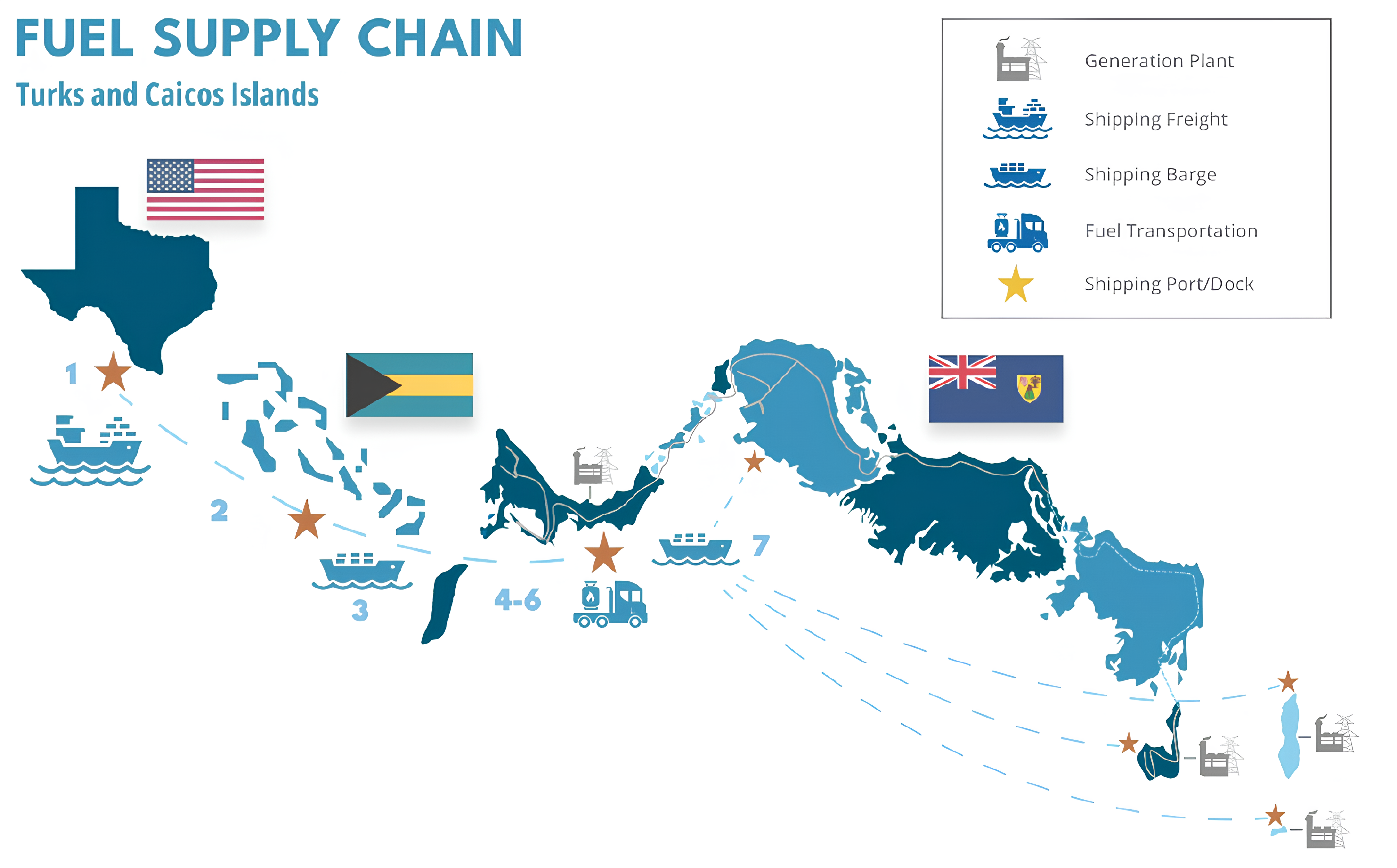
From Texas, USA, to the Bahamas, and then to TCI, the fuel journey is intricate.

Understanding these dynamics can help you to understand our fuel supply chain.

Supply Chain

Refinery in Texas, USA

The fuel supply chain starts at the refinery in Texas.

Shipping to the Bahamas

The fuel is shipped from Texas to Sun Oil in the Bahamas incurring freight and insurance expenses, as well as storage, handling taxes and wharfage.

Transport to Turks and Caicos Islands

Sun Oil transports the fuel to Turks and Caicos Islands by barges that can navigate shallow-water ports due to the absence of local deep-water harbor in TCI.

Transport to Leeward Highway

From Sun Oil’s Providenciales facility, the fuel is transported by trucks to Pelican Energy TCI’s fuel storage facilities on Leeward Highway.

Daily Deliveries to Providenciales Power Plant

Based on daily energy demand and usage, approximately 6–9 truck deliveries are needed per day to support the required supply to Pelican Energy TCI’s Providenciales power plant, where additional transportation costs are incurred.